


Targeted red + near-infrared light in a compact design.
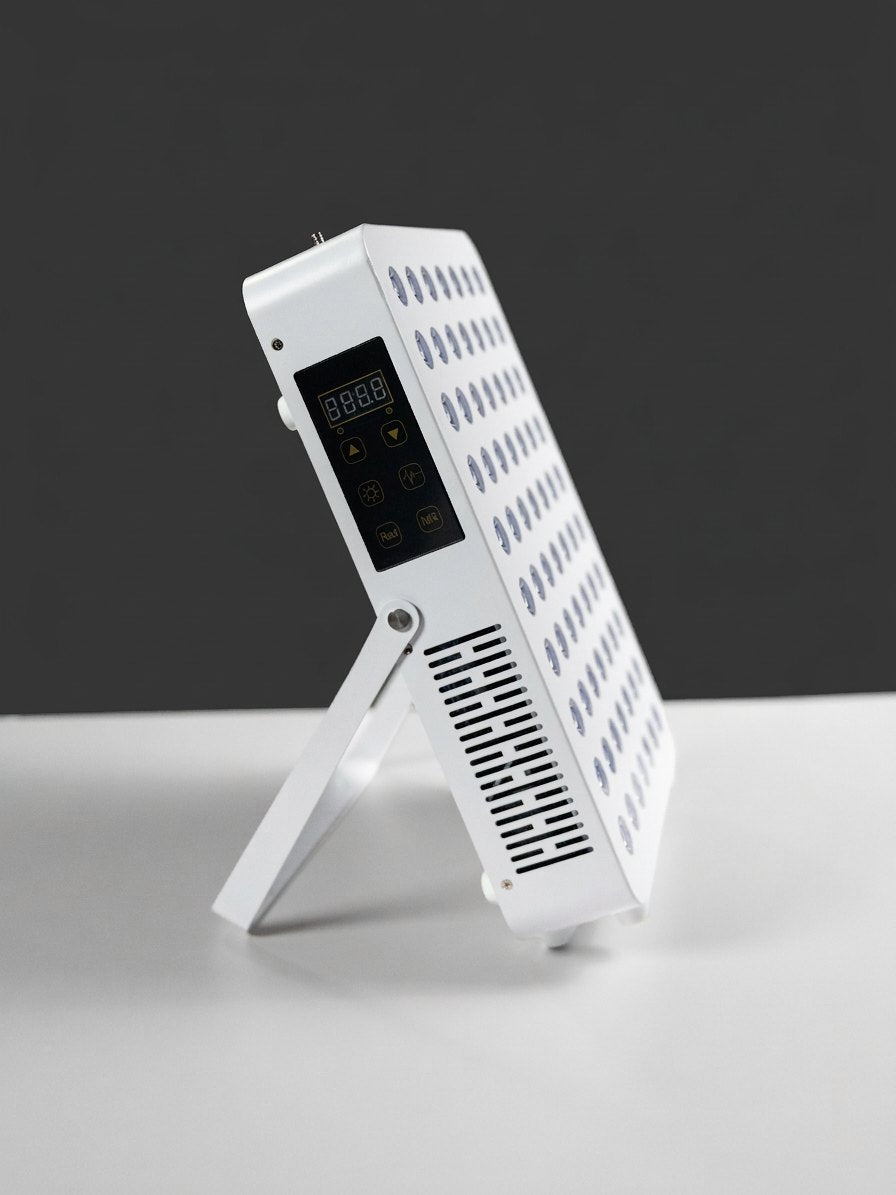
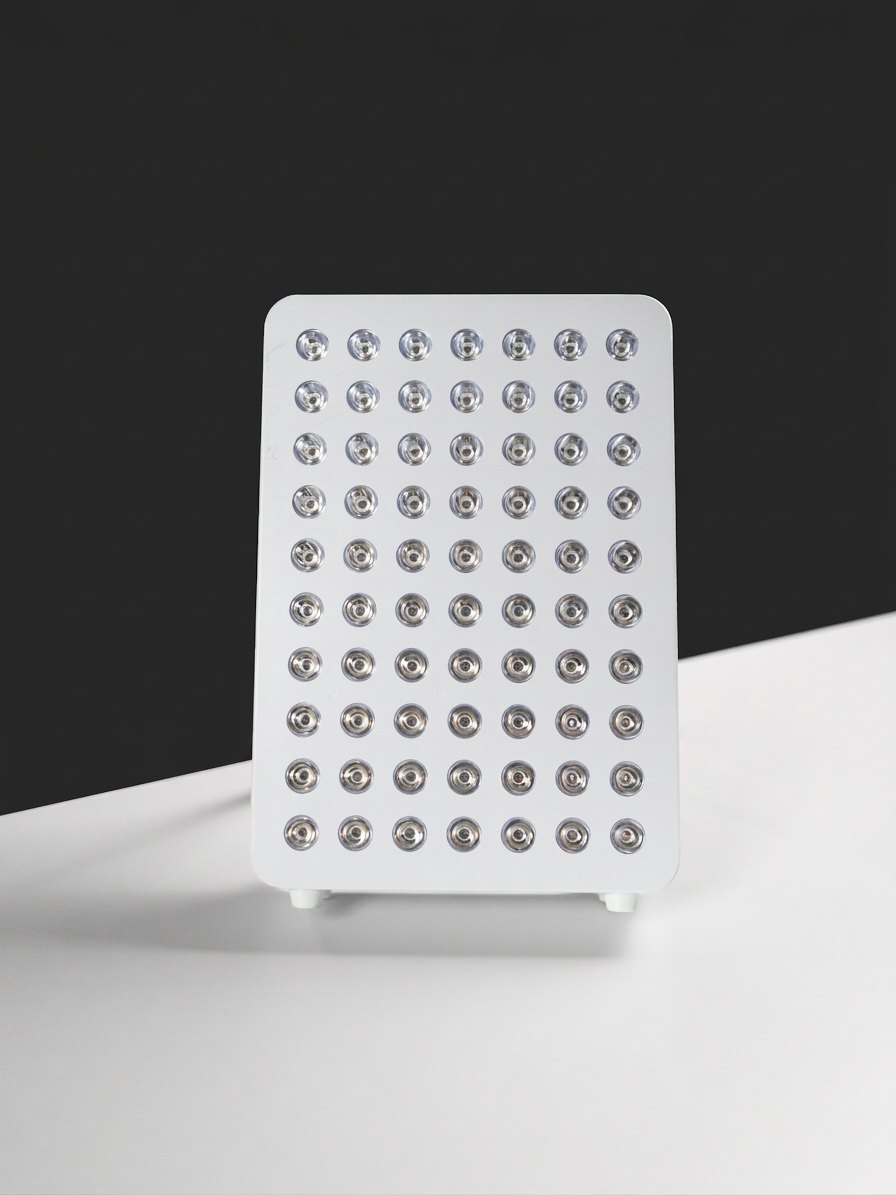
A compact 100W panel with 660 nm red light and 850 nm near-infrared light, designed for simple at-home sessions on the areas you want to focus on most.


What Is Red Light Therapy?
Red light therapy - often called photobiomodulation - uses specific wavelengths of visible red and near-infrared light. Unlike ultraviolet light, these wavelengths are non-UV and are used without intentionally heating the tissue. Researchers are studying how light absorbed by cells may influence mitochondrial activity, cellular signaling, circulation, inflammation, and tissue-repair processes.
Red light therapy is still an evolving area of research. Evidence is stronger for some uses than others, and results depend on factors such as wavelength, power, treatment distance, session length, and consistency.

What Is Red Light Studied For?
Skin appearance and collagen-related processes. Research suggests red-light photobiomodulation may support changes in skin texture and the appearance of fine lines when used consistently.
Exercise and muscle recovery. Photobiomodulation has been studied before and after exercise for soreness, fatigue, and recovery, with promising but variable results across protocols.
Localized comfort and recovery. Red and near-infrared wavelengths are also being studied for certain pain and inflammation applications, although an at-home wellness panel should not be marketed as treating a medical condition.
A consistent recovery routine. The biggest practical advantage of an at-home panel is convenience: it can be used regularly without scheduling appointments or leaving home.
Red Light vs. Near-Infrared
The compact panel combines 660 nm red light with 850 nm near-infrared light.
660 nm redVisible
Red light is visible and is generally used for more superficial tissue exposure, which is why it is commonly discussed in connection with skin-focused applications.
850 nm near-infraredInvisible to the eye
Near-infrared light is invisible to the eye and penetrates more deeply into tissue, which is why it is commonly studied for muscles, joints, and recovery applications.
Using both wavelength ranges in the same session gives customers a simple way to expose both superficial and deeper tissues without needing separate devices.
How to Use
-
 Step
For general wellness use, start with 10-20 minute sessions per treatment area, approximately 3-5 times per week.
-
 Step
Position the panel at the distance recommended in the owner’s manual, and adjust only within the device instructions. More exposure is not automatically better - dose depends on distance, intensity, and time.
-
 Step
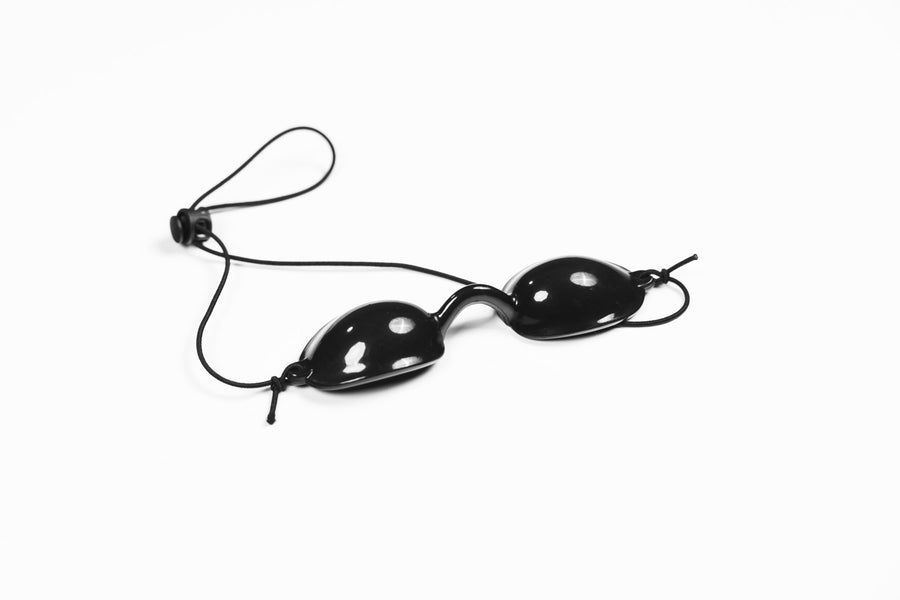
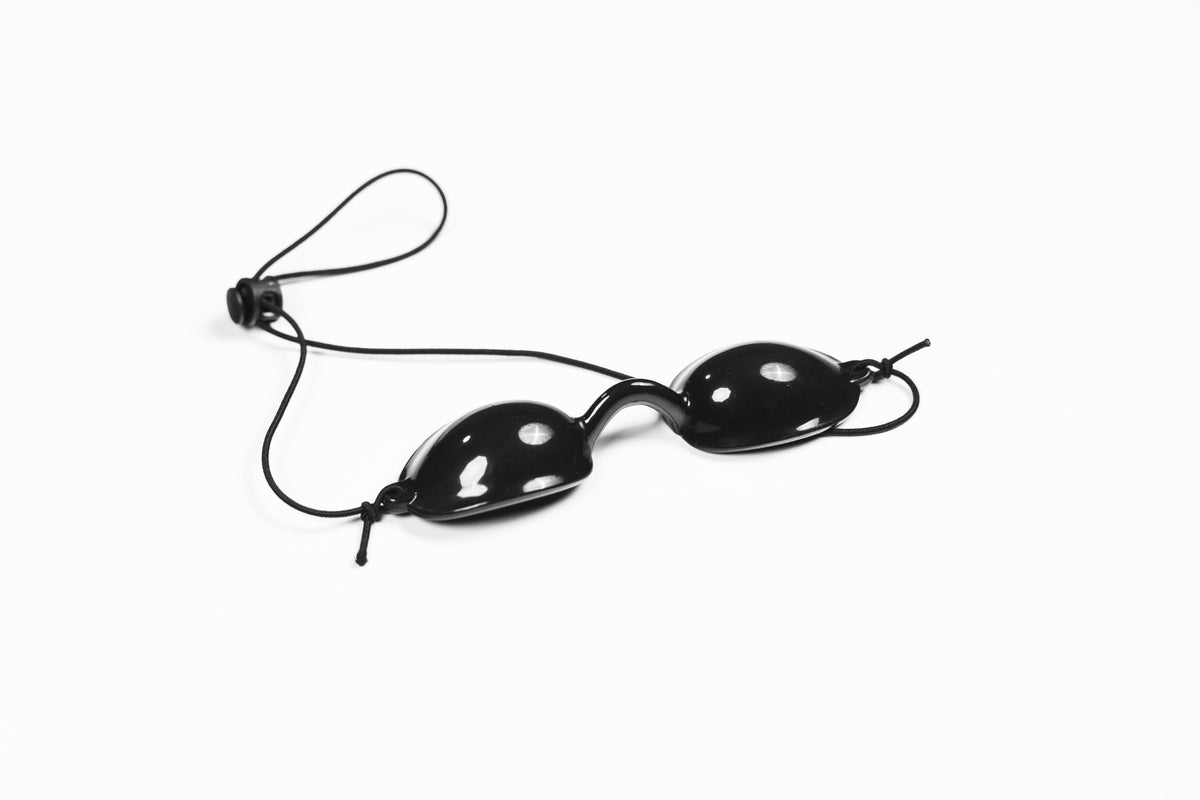
Use the included eye protection as directed. Customers with photosensitivity, eye conditions, or medications that increase sensitivity to light should talk with a qualified healthcare professional before use. Always follow the owner’s manual.
Product Specifications
- Wavelengths
- 660 nm red + 850 nm near-infrared, 1:1 ratio
- LED count
- 140 LEDs (2 x 70), dual-chip 5W
- Actual power
- 100W ±5%
- Input voltage
- AC100-240V
- Lens angle
- 30°
- Controls
- Dual-mode switch + timer function (5–20 min)
- Stand
- Built-in free-rotating stand
- Housing
- Sandblasted white alloy
- Dimensions
- 13.0 in L x 9.1 in W x 2.4 in H
- Net weight
- 6.3 lb
- Power cord
- eye mask
- lifting rope
- hanging strap
- Free shipping
- Ships in 1-2 business days
- 30 day return window from the time order is placed
- 1 Year manufacturer warranty
Compact vs. Large Red Light Panel
Choose Compact if you want an easy-to-position panel for a specific area. Choose Large if you want more coverage, more wavelength options, and the flexibility to roll the panel around or mount it on the wall.
Important Safety
Follow the product manual for treatment distance, session duration, and mode settings.
Use eye protection as directed and avoid staring directly into high-intensity LEDs.
Do not use on areas with known photosensitivity without medical guidance.
Ask a qualified healthcare professional before use if you take photosensitizing medications or have a condition affected by light exposure.
Do not use red light therapy as a replacement for medical evaluation or treatment.
FAQ
